
Transit Cooperative Research Program (TCRP): Street-Side Factors
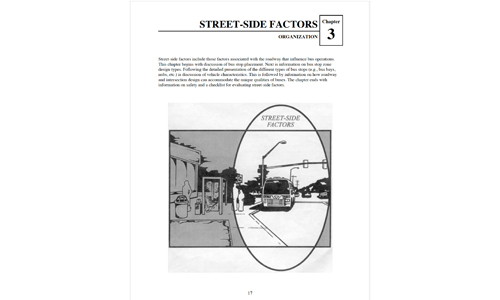
This chapter from the TCRP highlights the importance of street-side factors including bus stop location, configuration and special design features. Specifically, the report describes the advantages and disadvantages of far-side, near-side and mid-block stop locations, as well as curbside, bus bay and open bus bay stop configurations. A checklist is also provided to assist agencies in making design decisions.
Key Takeaways
- Design standardization can help minimize confusion and delays, but bus stop designs often need to be context-specific to best serve both riders and other vehicles.
- Near-side, far-side and midblock bus stop placements each have advantages and disadvantages, so other factors including roadway geometry, crosswalk location and visibility should be considered when siting bus stops.